Book Categories:

By Michael Mathews | Texas Birder Press
Artificial intelligence isn’t just for computer experts anymore. In fact, some of its most useful applications have nothing to do with computers at all.
If you’ve been hearing about artificial intelligence (AI) and wondering what all the excitement is about, you’re certainly not alone.
Perhaps you’ve heard people talking about ChatGPT, but you’re not quite sure what it does. Or maybe you’ve tried it once or twice and wondered what you’re supposed to ask it.
Here’s the good news: You don’t need to understand how artificial intelligence works to benefit from it.
You don’t need to know computer programming. You don’t need expensive equipment. And you certainly don’t need to be young enough to have grown up with a smartphone attached to your hand.
All you really need is a little curiosity.
Think of AI as a remarkably capable assistant you can talk to in ordinary English. You ask questions, explain what you’re trying to accomplish, and work together to find solutions.
Let’s look at seven practical ways you can put it to work today.
1. Write Better Emails, Letters, and Messages
Have you ever stared at a blank screen, knowing what you wanted to say but struggling to find the right words?
AI can help.
Suppose you need to write a polite email to a company about a product that isn’t working properly.
You could simply type:
Try asking AI:
“Help me write a friendly but firm email to a company about a product that stopped working after two weeks. I’d like a replacement or refund.”
Within seconds, you’ll have a draft you can review and personalize.
You can also ask AI to make your message shorter, friendlier, more professional, or even a little humorous.
The important thing is that you’re still in charge. AI helps you communicate your thoughts. It doesn’t have to replace your personality.
2. Plan a Vacation or Weekend Getaway
Planning a trip can involve hours of searching websites, comparing destinations, and figuring out what to do when you arrive.
AI can help organize the process.
Imagine you’re planning a three-day getaway to the Texas Hill Country.
Try asking AI:
“Help me plan a three-day trip to the Texas Hill Country. I enjoy scenic drives, nature, small towns, and good local restaurants. Keep the driving reasonable and suggest a relaxed itinerary.”
You can refine the suggestions by adding your budget, mobility considerations, preferred activities, or travel dates.
AI can even help create packing lists and compare possible destinations.
Just remember to verify current prices, business hours, road conditions, and reservations before making final plans. AI is a planning assistant, not a guarantee that the restaurant you want is open on Tuesday.
3. Figure Out What’s for Dinner
Here’s a problem that has followed humanity for generations:
“What are we going to eat tonight?”
AI won’t cook dinner for you, but it can certainly help you decide.
Suppose you have chicken, rice, onions, and a few vegetables in the refrigerator.
Try asking AI:
“I have chicken breasts, rice, onions, carrots, and some basic seasonings. Suggest three easy dinner ideas that take less than 45 minutes.”
You can ask for recipes, cooking instructions, substitutions, or a shopping list.
You can even tell it what you don’t like.
And unlike some people I know, AI won’t complain when you change your mind about dinner three times.
4. Learn Something New Without Feeling Overwhelmed
One of my favorite uses of AI is learning.
Perhaps you’ve always wanted to understand photography, learn more about birds, improve your computer skills, or explore a subject you’ve been curious about for years.
AI can explain complicated ideas in everyday language.
Try asking AI:
“Explain how camera aperture, shutter speed, and ISO work together. I’m a beginner, so use simple examples.”
If the explanation is too complicated, just say:
“Explain that more simply.”
You can ask follow-up questions without worrying that you’re taking up someone’s time.
You can even ask AI to quiz you, create practice exercises, or develop a simple learning plan.
Of course, AI can make mistakes. For important information, verify what it tells you with reliable sources.
But as a learning companion, it can be remarkably useful.
5. Organize Projects and Tackle Everyday Problems
Most of us have projects we’ve been meaning to finish.
Organizing photographs. Cleaning out a garage. Planning a family gathering. Getting household paperwork in order.
Sometimes the hardest part is simply figuring out where to begin.
AI can help break a complicated project into manageable pieces.
Try asking AI:
“I have thousands of digital photographs scattered across several folders. Help me create a simple system for organizing them without spending weeks on the project.”
Or:
“Help me plan a family reunion for 25 people. Give me a checklist of what needs to be done and when.”
You can adjust the plan until it fits your circumstances.
The goal isn’t to let AI run your life. It’s to spend less time figuring out what to do and more time actually doing it.
6. Explore Your Hobbies and Creative Interests
This is where things can get especially interesting.
AI can help gardeners plan flower beds, photographers learn new techniques, writers develop ideas, and hobbyists explore unfamiliar subjects.
If you’re a birdwatcher, for example, you might ask:
Try asking AI:
“I’m planning a spring birding trip to the Texas Gulf Coast. What habitats should I explore, and which groups of migrating birds should I learn to identify before I go?”
Or perhaps you’re interested in writing your family history.
You could ask AI to help organize your memories into chapters or suggest questions to ask relatives.
AI can be a wonderful brainstorming partner, particularly when you have an idea but aren’t sure how to develop it.
It doesn’t replace your experience or creativity. It helps you make better use of both.
7. Make Everyday Decisions With More Confidence
We make decisions constantly.
Which appliance should we consider? What questions should we ask a contractor? How can we compare two service plans? What should we know before purchasing a new computer?
AI can help organize information and identify questions you might otherwise overlook.
Try asking AI:
“I’m comparing two laptop computers. I mostly use email, browse the internet, edit photographs, and occasionally work with video. What specifications should matter most to me?”
You can then provide the specifications of the computers you’re considering and ask for a comparison.
For important financial, legal, or medical decisions, AI should help you prepare questions and understand options, not replace qualified professional advice.
Used thoughtfully, however, it can help you become a better-informed decision-maker.
Getting Started Is Easier Than You Think
If you’ve never used AI before, here’s a simple way to begin.
Visit ChatGPT, create an account if needed, and start a conversation.
You don’t need special commands or complicated instructions.
Just explain what you want in ordinary language.
And here’s something worth remembering: Your first question doesn’t have to be perfect.
If the answer isn’t quite what you wanted, ask another question. Explain what you meant. Request more detail or a simpler explanation.
That’s one of the most useful things about conversational AI. You can work through a problem together, one question at a time.
A Few Things to Remember
Artificial intelligence is powerful, but it isn’t infallible.
It can misunderstand questions, provide outdated information, and occasionally give answers that sound convincing but are simply wrong.
Don’t share passwords, sensitive financial information, or other private details unnecessarily. Verify important facts, especially when decisions involve money, health, safety, or legal matters.
And always remember that you’re the decision-maker.
AI is a tool. A very capable one, certainly, but still a tool.
Want to Learn More? I Wrote a Book Just for You.
Over the past couple of years, I’ve incorporated AI into my writing, research, photography, publishing, business activities, and everyday life.
I’ve discovered that its greatest value often comes from surprisingly ordinary applications.
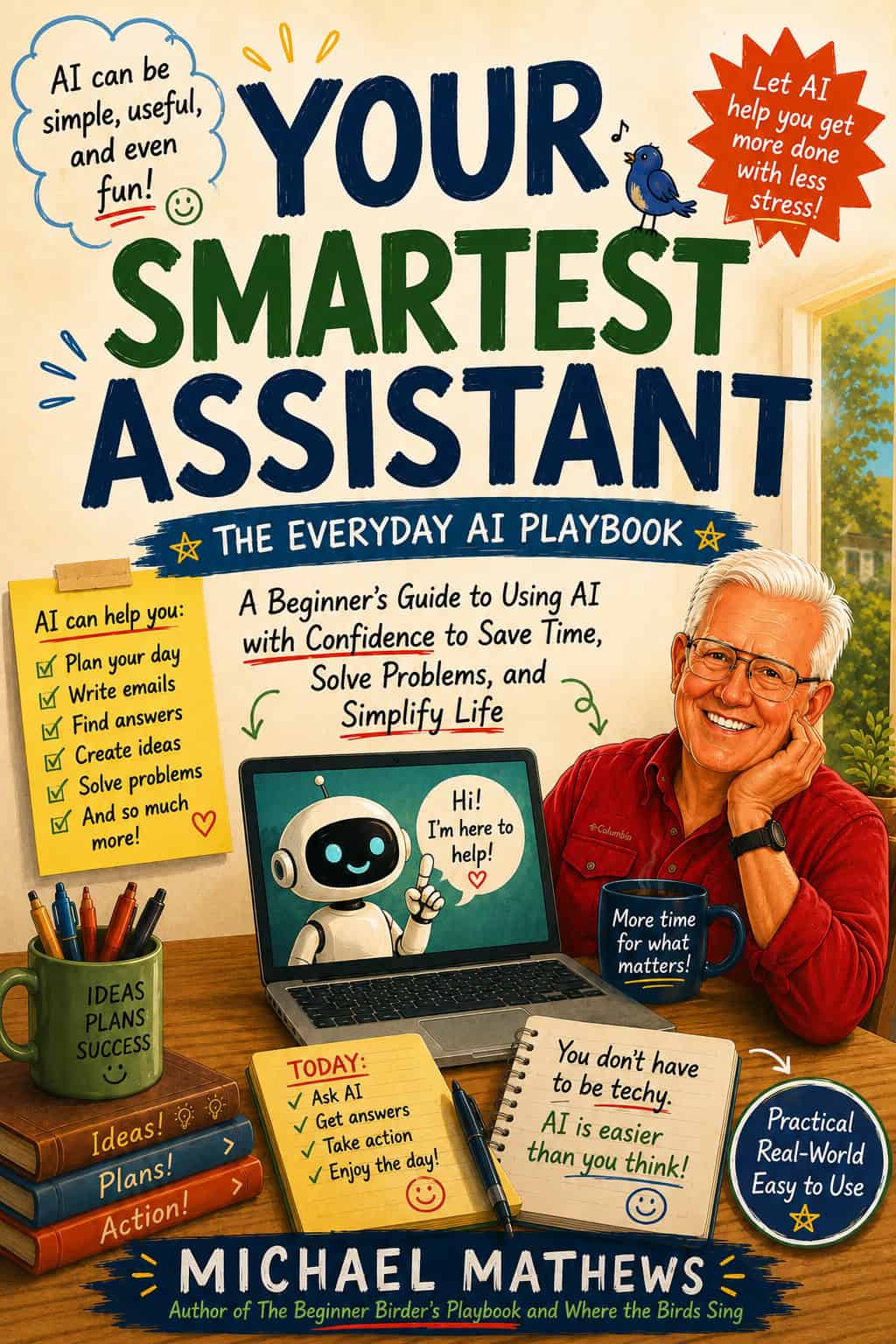
That’s what inspired me to write Your Smartest Assistant: The Everyday AI Playbook.
It’s a friendly, practical introduction to using AI with confidence, written for everyday people rather than computer specialists.
The 186-page paperback includes real-world examples, easy-to-follow explanations, and hands-on “Your Turn” exercises to help you put what you’ve learned into practice.
Whether you’re enjoying retirement, running a business, pursuing hobbies, or simply curious about what AI can do, I wrote this book to help you get started.
Your Smartest Assistant: The Everyday AI Playbook
Paperback | 186 pages | $14.99
Learn more or order your copy from Texas Birder Press.
AI Made Simple. Life Made Better.
